

If you’ve ever searched “how to stop guilting myself” after eating something sweet, you’re not alone.
Food guilt has become normalised. We celebrate “being good”, punish ourselves for “being bad”, and tie our worth to what we ate at 3pm. But that cycle doesn’t create health. It creates stress. And stress affects everything — from your hormones to your digestion to your ability to feel present.
The truth? Real wellbeing doesn’t come from restriction. It comes from balance, boundaries, and self-compassion.
This is the Guilt-Free Eating Framework — a practical, grounded approach to help you stop guilting yourself and start making mindful choices that actually support your body and mind.
1. Understand What Food Guilt Really Is
Food guilt isn’t about food. It’s about fear — fear of losing control, fear of weight gain, fear of “undoing progress”.
When you label foods as “good” or “bad”, your brain assigns moral value to eating. The moment you eat something outside your mental rulebook, guilt kicks in.
But guilt doesn’t improve your habits. It increases stress hormones, which can:
- Disrupt hunger signals
- Increase cravings
- Impact blood sugar stability
- Influence sleep and mood
If your goal is to feel good physically and mentally, reducing guilt is not indulgent — it’s strategic.
2. Shift From “Guilt-Free” to “Choice-Based”
The phrase guilt-free can be empowering — but only if it doesn’t mean “perfect”.
Instead of asking, “Is this allowed?” ask:
“Is this aligned with how I want to feel?”
That small shift changes everything. You move from restriction to mindful eating. From punishment to mindful choices.
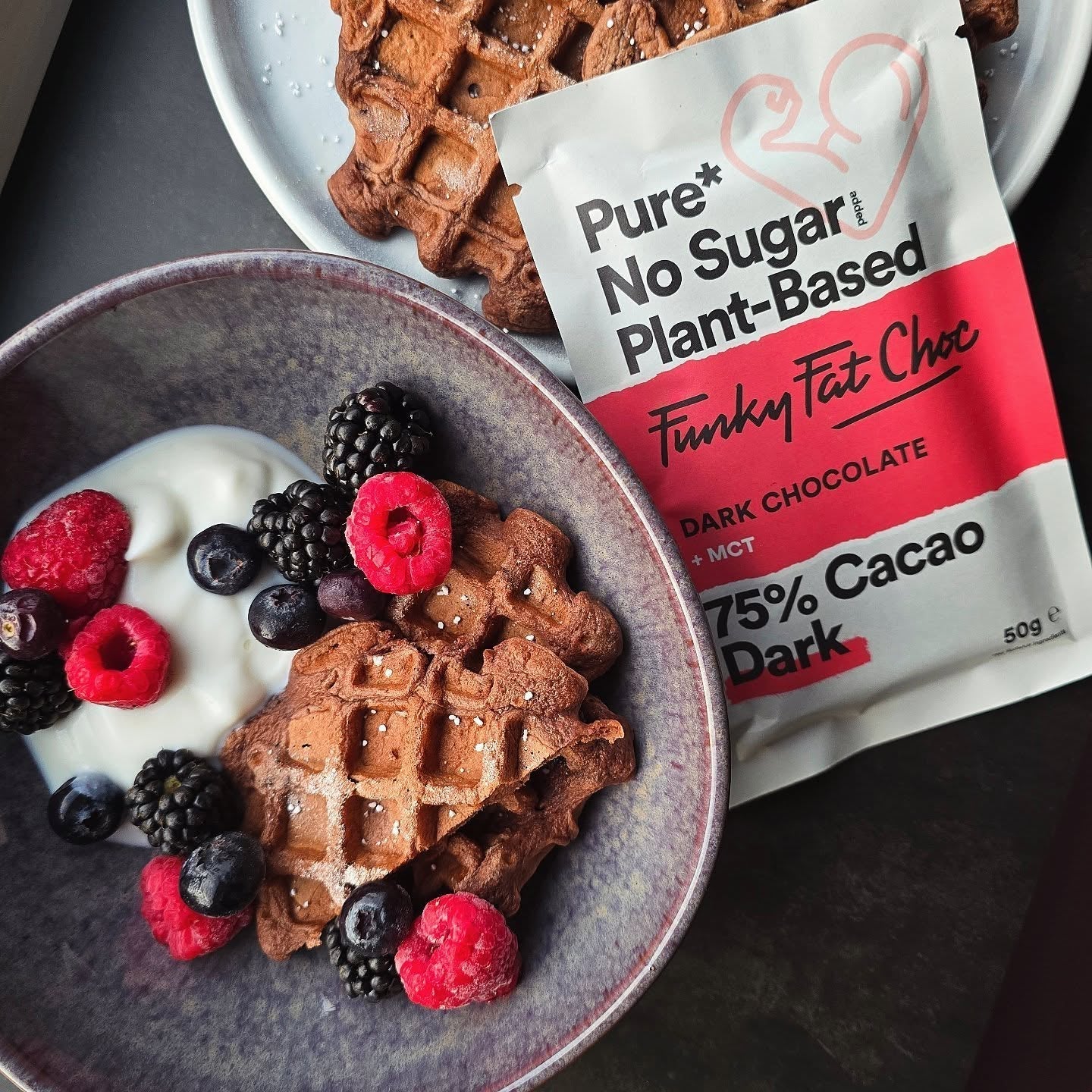
Some days that choice might be a no added sugar chocolate bar. Other days it might not. The power is in the awareness, not the rule.

3. Regulate Before You Restrict
Many guilt spirals start when we eat in a dysregulated state — stressed, overwhelmed, exhausted.
When your nervous system is overloaded, your body naturally seeks quick energy and comfort. That’s biology, not weakness.
Before changing what you eat, try regulating how you feel:
- Take 5 slow breaths before snacking
- Pause and notice your hunger level
- Drink water first if you’re unsure
- Step outside for fresh air
When your system is calmer, your choices become clearer.
4. Respect Your Hormones
Your appetite isn’t random. It’s hormonal.
Hormones like insulin, cortisol, ghrelin, and leptin influence hunger, fullness, and cravings. Chronic restriction, lack of sleep, and stress can throw them off balance.
Ironically, constant guilt can increase cortisol — the stress hormone — making cravings more intense.
Instead of fighting your body, support it:
- Include protein and healthy fats in snacks
- Avoid extreme restriction cycles
- Choose options with no added sugar when you want steadier energy
- Prioritise sleep and stress management
When your hormones are supported, cravings feel less chaotic.
5. Clarify Your Priorities
You can’t make aligned food decisions without knowing your priorities.
Ask yourself:
- Do I want steady energy?
- Do I want better focus?
- Do I want improved digestion?
- Do I want emotional balance?
When your priorities are clear, your choices stop being moral. They become practical.
For example, choosing a snack made with quality fats and no added sugar isn’t about being “good”. It’s about supporting your energy and mental clarity.
6. Build Balanced Snacks on Purpose
One reason guilt happens is because certain foods trigger a cycle of spike → crash → crave → repeat.
A more balanced snack can break that loop.
Aim for:
- Healthy fats for satiety
- Protein for stability
- Fibre for digestion
- Minimal added sugars
Chocolate can absolutely fit here — especially when it’s made with thoughtful ingredients. The goal isn’t elimination. It’s stability.

7. Create Boundaries, Not Restrictions
Boundaries feel different from rules.
Rules say: “I can never eat this.”
Boundaries say: “I don’t feel great when I eat this often.”
Boundaries are based on self-awareness. They protect your energy and wellbeing.
For example:
- Keeping certain snacks out of sight if they trigger mindless eating
- Deciding to sit down when you eat chocolate instead of eating it distracted
- Choosing quality over quantity
Boundaries support balance without creating rebellion.
8. Practise Self-Compassion After Eating
If you overeat or make a choice you regret, the response matters more than the action.
Instead of:
“I have no discipline.”
Try:
“That didn’t feel great. What can I learn from it?”
Self-compassion reduces shame and makes behaviour change sustainable. Research consistently shows that people who respond to setbacks with kindness are more consistent long-term.
Guilt creates extremes. Compassion creates progress.
9. Make Mindful Eating a Daily Practice
Mindful eating doesn’t require meditation cushions or perfect silence.
It can be as simple as:
- Tasting your food fully
- Putting your fork down between bites
- Noticing texture and flavour
- Checking in halfway through
When you eat mindfully, satisfaction increases. And when satisfaction increases, overeating decreases naturally.
Mindfulness turns food from a battle into an experience.
10. Redefine What “Stay Funky” Means
To stay funky isn’t about being extreme. It’s about staying true to what makes you feel good.
It means:
- Choosing foods that energise you
- Honouring your hunger
- Respecting your boundaries
- Letting go of unnecessary guilt
It’s a mindset of balance over perfection. Progress over punishment.

11. Stop Waiting to “Deserve” Food
You don’t have to earn chocolate. You don’t have to burn off dessert. You don’t have to compensate tomorrow for what you ate today.
This earn-and-punish cycle keeps guilt alive.
Instead, aim for consistency:
- Eat balanced meals regularly
- Include foods you genuinely enjoy
- Choose quality ingredients when possible
- Adjust gently, not dramatically
Consistency stabilises your body — and your mindset.
12. Focus on How You Feel After
The simplest framework question is this:
“How do I feel 30 minutes after eating this?”
Not morally. Physically and mentally.
Do you feel:
- Steady or shaky?
- Clear or foggy?
- Satisfied or still searching?
Let that data guide you. Not guilt. Not trends. Not extremes.
The Guilt-Free Eating Framework (Recap)
- Understand food guilt
- Shift to choice-based thinking
- Regulate before restricting
- Respect your hormones
- Clarify your priorities
- Build balanced snacks
- Create boundaries, not rules
- Practise self-compassion
- Eat mindfully
- Stay funky (stay aligned)
- Stop earning your food
- Focus on how you feel after
Final Thoughts: Balance Over Perfection
If you’re trying to figure out how to stop guilting yourself, start here: guilt is not a health strategy.
Health is built on awareness, balance, boundaries, and self-compassion.
You don’t need stricter rules. You need better alignment. You need snacks that support your hormones and energy. You need mindful choices that reflect your priorities.
And you deserve to enjoy food without turning it into a moral test.
Stay balanced. Stay compassionate. Stay funky.


Leave a comment
All comments are moderated before being published.
This site is protected by hCaptcha and the hCaptcha Privacy Policy and Terms of Service apply.