

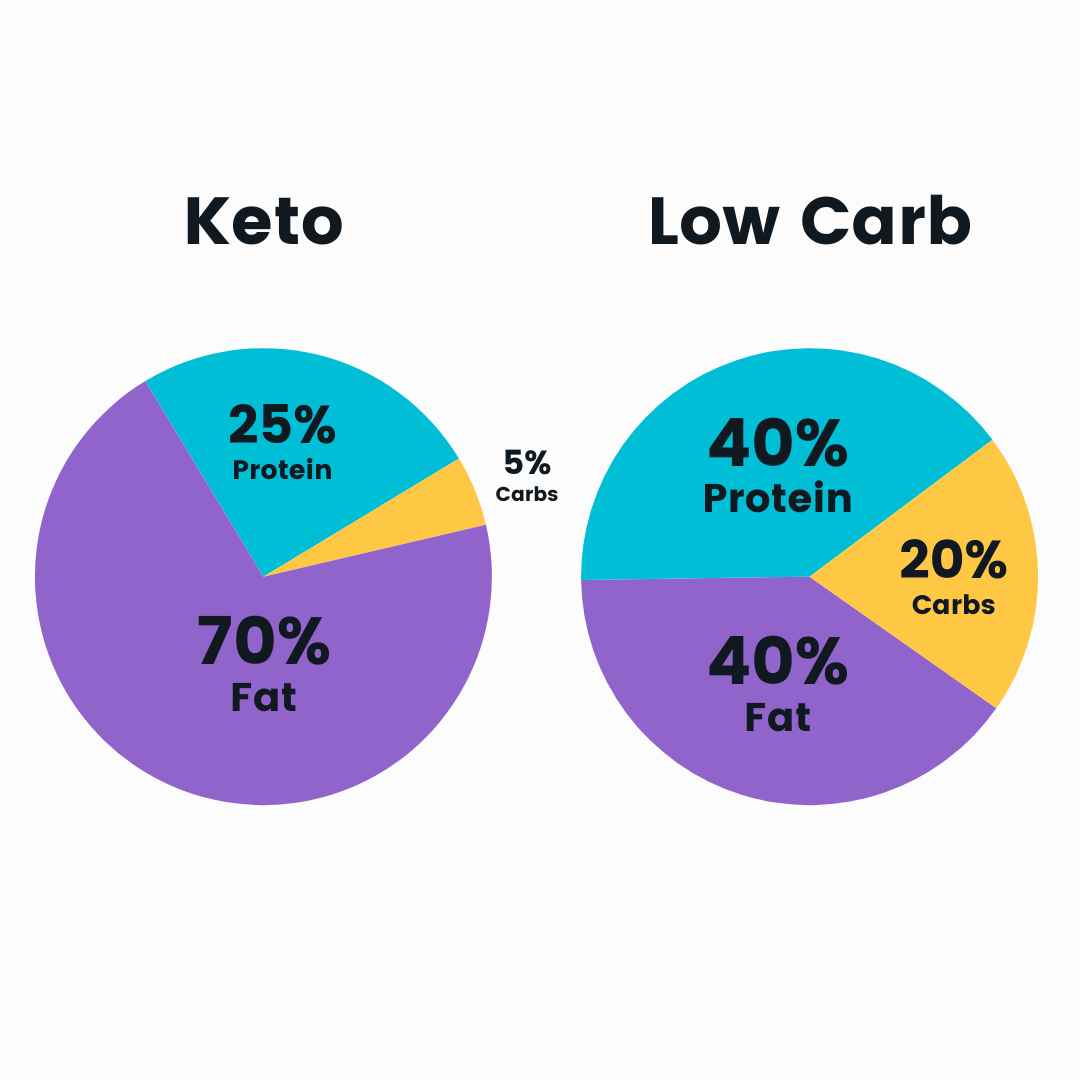
Keto and low carb often get dropped into the same dietary box. Related? Yes. Identical? Not even close. Keto is a very-low-carbohydrate approach designed to produce nutritional ketosis and is usually higher in fat with adequate, rather than necessarily high, protein. “Low carb” covers a wider range of carbohydrate intakes, with no required metabolic state and no single rule for fat or protein. Let’s put the labels side by side and see what the research actually says.
Keto vs. low carb: same family, different rules
The ketogenic diet was developed as a clinical therapy for epilepsy in the 1920s and is still used under specialist supervision for some people with drug-resistant epilepsy. Low-carbohydrate approaches have a broader history and have been studied in areas including weight management and type 2 diabetes. That history does not mean either approach provides universal health benefits, and a clinical ketogenic diet is not the same as a consumer lifestyle label.
First, the practical differences between standard keto and low-carb eating. Because the fine print matters.
1. Macronutrient composition
Ketogenic diets: very low in carbohydrate, generally higher in fat and adequate in protein
Research definitions vary. Very-low-carbohydrate diets are often defined as below 10% of energy from carbohydrate or roughly 20–50 grams per day, but clinical protocols are individualised. The purpose is to support nutritional ketosis, in which circulating ketones increase. The body still uses glucose as well as fat-derived fuels; it does not simply switch from one fuel to another.
Protein can contribute to glucose production through gluconeogenesis, but the claim that a little “too much” protein automatically prevents ketosis is an oversimplification. Protein needs and ketogenic targets depend on the protocol and the person.
Low-carbohydrate diets: definitions vary, with no required ketosis
In research, low-carbohydrate diets are often defined as less than 130 grams per day or less than 26% of energy from carbohydrate. Some versions are lower and others more moderate. They are not automatically high in protein or fat, and reducing carbohydrate does not necessarily reduce total energy intake.
Both patterns can include non-starchy vegetables, but vegetables do not belong to either team. Food quality, variety and nutritional adequacy still matter, whatever label sits at the top of the meal plan.

2. Metabolic aim
A ketogenic diet aims to achieve and maintain nutritional ketosis. Ketone levels can be measured in blood, breath or urine, although whether monitoring is useful depends on the reason for following the diet. A medically prescribed ketogenic therapy uses defined protocols and professional monitoring.
A low-carbohydrate diet does not require ketosis. People may try it for different reasons, but the label alone does not promise weight loss, improved health or blood-sugar control. Those outcomes depend on the person, the full diet, medication, adherence and the comparison diet.
3. Flexibility
Keto usually requires a narrower carbohydrate range to maintain ketosis, so it can involve more planning and fewer food choices. Clinical ketogenic protocols can be especially structured.
Low-carb approaches generally allow a wider carbohydrate range, but flexibility still depends on the chosen target and the foods included.
What the studies actually say
This is where the internet tends to get loud and the evidence asks everyone to lower their voice. Research findings are specific to the population, duration, diet definition and comparison group. A result from one trial is not a guaranteed outcome, and scientific evidence alone does not authorise a health claim in food marketing.
1. Weight-management research
The headline is less dramatic than diet culture might like. A 2022 Cochrane review of 61 randomised trials involving 6,925 adults found probably little to no difference in weight loss between low-carbohydrate and balanced-carbohydrate weight-reducing diets over periods of up to two years. Early scale changes on very-low-carbohydrate diets can also include water loss, so they should not be described simply as accelerated fat burning.
2. Type 2 diabetes research
A 2021 systematic review and meta-analysis found that some adults with type 2 diabetes who adhered to low-carbohydrate diets had better remission outcomes at six months than comparison groups, based on moderate- to low-certainty evidence. Promising at six months is not the same as proven forever: the advantage was smaller or absent at 12 months, and the authors highlighted uncertainty around longer-term outcomes. This does not establish a product claim or make carbohydrate restriction appropriate for everyone with diabetes, insulin resistance or prediabetes. Medication may need adjustment, so dietary changes require clinical supervision. For background only, see our article on insulin resistance.
3. Drug-resistant epilepsy research
Ketogenic diet therapy has an established specialist role for some children and adults with drug-resistant epilepsy. A Cochrane review found evidence that ketogenic diets can reduce seizure frequency for some patients, while also reporting adverse effects and treatment withdrawals. This is a medical therapy, not a do-it-yourself wellness diet, and it does not substantiate claims for ordinary foods sold as keto or low carb.
For epilepsy, the goal, formulation, monitoring and duration are set with a specialist clinical team. That may involve longer-term use when clinically appropriate, so it would be inaccurate to call every ketogenic diet a short-term solution.
4. Cognition and energy research
Research into ketogenic diets and cognition includes small, varied studies in different populations. Systematic reviews describe possible signals in some neurological conditions, but anecdotes are not trials and the evidence does not prove that keto gives healthy consumers greater mental clarity or focus.
The same goes for steady, all-day energy. No diet comes with a guaranteed 3 p.m. glow. Individual experiences vary, and neither keto nor low-carb eating can be promised to eliminate tiredness, fluctuations or afternoon crashes.

Whatever framework you follow, choose food for the flavour, ingredients and fit with your routine, not for a dramatic promise. Chocolate should still taste like a treat, not read like a treatment plan.
Which approach fits your goal, life and timeline?
Start with the job you want the diet to do. Are you considering a medically prescribed ketogenic therapy, a structured weight-management programme, a clinician-supported change for type 2 diabetes, or simply a different way to organise meals? Those are not interchangeable goals.
A diet does not need to become your personality. For some non-clinical goals, a time-limited trial with clear review points may be more useful than promising a permanent lifestyle change. For other people, a less restrictive pattern may be workable for longer. Duration should be based on response, nutritional adequacy, sustainability and professional advice, not a generic rule.
If the goal is weight management, current comparative evidence does not show that low-carb diets are clearly superior to balanced-carbohydrate diets over the longer term. If the goal relates to type 2 diabetes, discuss carbohydrate restriction and medication safety with the treating clinician. If the goal is epilepsy treatment, ketogenic therapy belongs with a specialist team. A PCOS diagnosis also needs individual clinical guidance; our older article about keto and PCOS should not replace that advice.
Before trying keto or a substantial carbohydrate restriction, consider your medical history, medication, food preferences, daily routine and the practical quality of the full diet. A registered dietitian or other appropriately qualified professional can help set a realistic goal, identify safety considerations and agree when to review or stop the approach. The best plan is not the strictest one. It is the one with a clear purpose that still works when real life turns up.
Research sources
- Cochrane: Low-carbohydrate versus balanced-carbohydrate diets for weight loss and cardiovascular risk
- BMJ: Low- and very-low-carbohydrate diets for type 2 diabetes remission
- Cochrane: Ketogenic diets for drug-resistant epilepsy
- Systematic review: Ketogenic diets and cognition



Leave a comment
All comments are moderated before being published.
This site is protected by hCaptcha and the hCaptcha Privacy Policy and Terms of Service apply.