

You probably acknowledged the existence of MCT’s already - via Instagram snaps of bulletproof coffees, on one of your keto groups, in the supermarket... or on our chocolate's ingredients list.
But do you really know what it is and why it is used?
We found a lot of technical explanations out there, which can get confusing at times, so we decided to keep it simple. By the end of this blog post, you will know the difference between MCT’s C8 and C10: the kinds we use in our Funky Fat Treats for their specific fatty-acid profile.
But first, what are MCT’s?
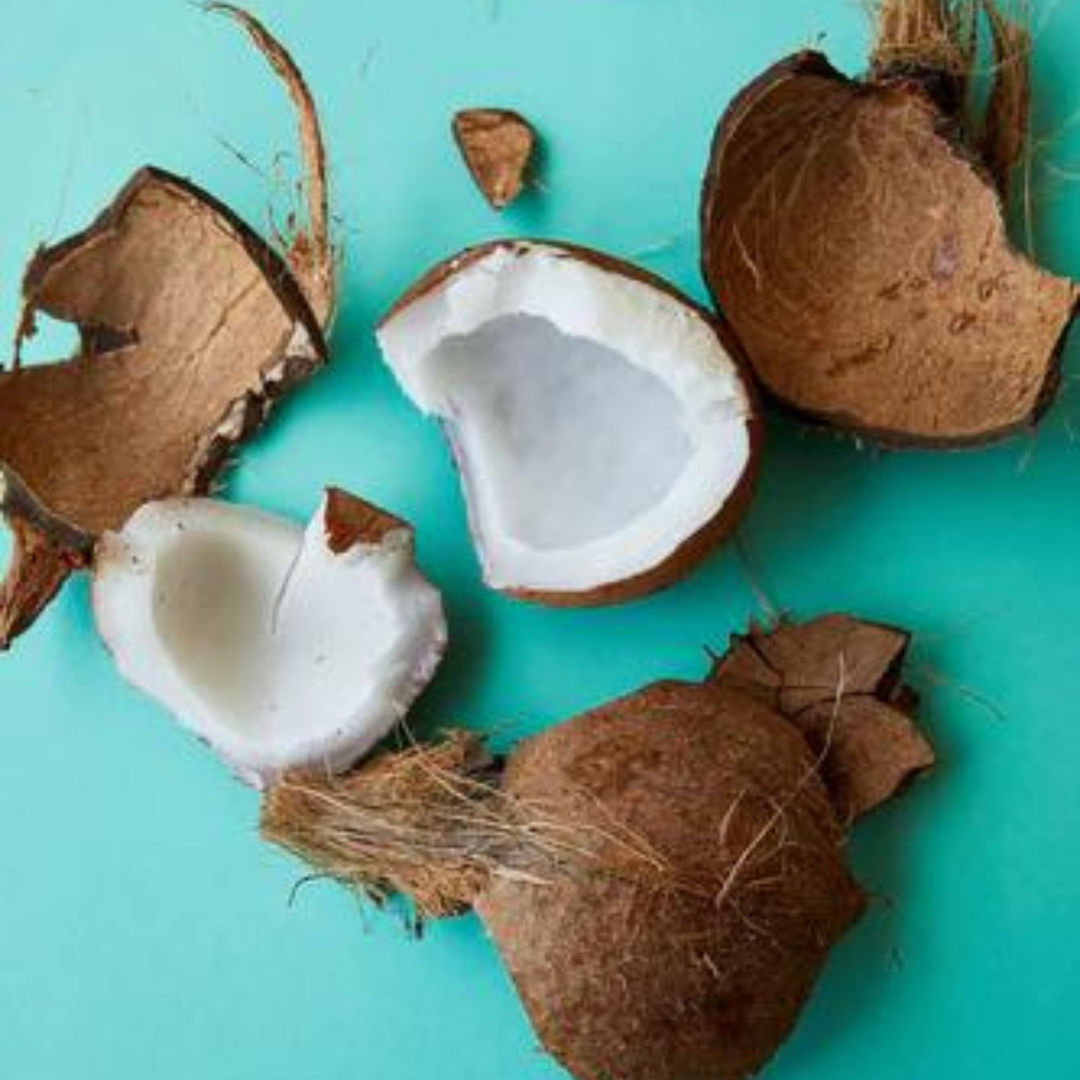
Most fats are made of long-chain fatty acids, like for example, Omega-3’s. MCT is short for medium-chain triglycerides. As the name suggests, they are medium-length chains of fatty acids found in oils, mainly coconut oil and palm kernel oil, and other fats (we use the one from coconut oil). Triglycerides are one common form of fat in foods and in the body.
But what makes MCT’s stand out from long-chain fatty acids is their shorter length. Compared with many long-chain fats, MCT’s are absorbed and transported differently in the body, which is one reason they are often discussed in keto and ingredient conversations.
There are four different types of MCT’s: C6, C8, C10 and C12. They are named like that because of the number of carbon atoms (6 to 12) they contain. Each of them has its own properties. C8 and C10 are the two types most often used in MCT oil blends, and they are the two we chose for our bars.
But what’s ‘wrong’ with the other 2 types? Nothing. Well, C6 is short-chain and can taste quite bitter. Some people also find it less comfortable on the stomach. And C12, although it is considered an MCT, has a longer fatty chain (12), which makes it behave a little differently from C8 and C10. When we talk about MCTs in food, it is safer to keep the focus on what they are and why they are used as an ingredient.
MCTs C8 and C10
Most high-quality MCT Oils contain only type C8 and C10. And that’s exactly what we use as an ingredient choice for our chocolate bars.
Here’s a quick explanation of the main characteristics of these two types of MCT:
C8: Caprylic acid. Because of its shorter chain length, C8 is often discussed as one of the more rapidly metabolised MCT fatty acids. In nutrition research, C8 is usually studied as an isolated oil or fatty acid, not as a promise of a specific effect from a finished food product.
C10: Capric Acid. This one is a bit longer than C8, but still belongs to the medium-chain family. C10 is also commonly used in MCT oil blends and has been studied for its fatty-acid properties in research settings.
What research says about MCT C8/C10
Okay, now you know what are MCTs and you also know there are different types. But how does all this concern you?
Well, the research around MCTs is interesting, but we want to keep it accurate. Here are the main points, without overpromising:
- They are metabolised differently from many long-chain fats. MCTs are popularly discussed because they are absorbed and processed differently from many long-chain fatty acids. For a food blog, it is safest to explain this as ingredient background, not as a promised result.
- They are common in keto conversations. MCT oil is often used by people who follow a keto lifestyle. We can talk about that context, while keeping the wording neutral and avoiding promised outcomes.
- They work well in rich recipes. Because MCTs are fats, they can fit naturally into creamy snacks and drinks. That makes them a natural match for chocolate, coffee, and smoothie-style recipes.
- They are used for their fatty-acid profile: MCT oils often focus on C8, C10, or a combination of both. That clear ratio is one practical way to compare products.
- They are not all the same. C8 and C10 are both medium-chain fatty acids, but their chain lengths are different. That is why some MCT oils specify the ratio on the label.
- Quality matters. Origin, processing, and ingredient transparency are worth checking when you buy MCT oil. We like knowing exactly what kind of MCT we are working with.
- Taste still counts. MCT oil is usually neutral, which makes it easy to use in recipes without changing the flavour too much. That is helpful when chocolate is the star.
- Tolerance varies. If you use MCT oil separately in coffee or smoothies, some people prefer to start small and see what feels comfortable for them.
These are some of the reasons we chose this ingredient for our Funky Fat Chocs. Pretty awesome, right?
So from now on, remember that you’re not just enjoying a chocolate bar - there is some thoughtful ingredient work behind it.
And if you are looking specifically for a C8/C10 MCT oil, check the label and look for the ratio. Coconut oil naturally contains a wider mix of fatty acids, while concentrated MCT oil is usually made to feature C8, C10, or both.
If you eat one of our Funky Fat Treats, you’ll enjoy the same Funky Fat taste, with MCT’s C8/C10 as part of the recipe.
And if you like using MCT oil separately, many people add it to coffee, smoothies, or however they prefer.
Tip from a Registered Dietitian
Adding MCT to your diet can be a simple way to include a specific fat source in your routine. But quality matters!
Now that the keto lifestyle is hitting the mainstream, also more products such as MCT oil make their way to the market. With more and more brands to choose from, you might wonder how to recognize high-quality MCT oil. Not all brands show the exact origin or ratio of the different MCTs, but the consistency of most commercial brands is a 50/50 combination of C8 and C10 fats.
Both C8 as C10 are mostly found in coconut oil or palm oil. Be aware to not confuse the ultra-processed versions of coconut and palm oils with organic, virgin, sustainable and unrefined oils when picking your MCT oil.
- Lotte Damen from Myndfuel
References and further reading
- European Commission: Nutrition and Health Claims
- Marten B, Pfeuffer M, Schrezenmeir J. Medium-chain triglycerides. International Dairy Journal. 2006.

5 comments
Funky Fat Foods
Disclaimer: we are not nutritionists, therefore if you want to know what is the correct amount for you to take in a day I would suggest you talk to a professional. However, reading on some blogs and from personal experience, I would say the ideal would be to take between 4 – 7 tablespoons a day. It’s an acquired flavor for some, so I would recommend you try 1 teaspoon and see how that goes. If you feel comfortable then increase to 1 tablespoon and so on. Spread them throughout the day and in different meals/drinks or chocolate 🍫
Paula
How much of each should you take every day?
Rosidin Jamhudi
I am regularly drinking c8 n c10 product.
Effect c8 is hotter feeling in my body, increase energy n memory.
But I think for weight lost, c10 is more effective n efficient… this is from my experience.
JEz
Thank you! I didn’t know the shorter chain and the C8 properties to help my ulcer. Great write up too (from the UK)
Trina
Great information. Thanks
Leave a comment
All comments are moderated before being published.
This site is protected by hCaptcha and the hCaptcha Privacy Policy and Terms of Service apply.