

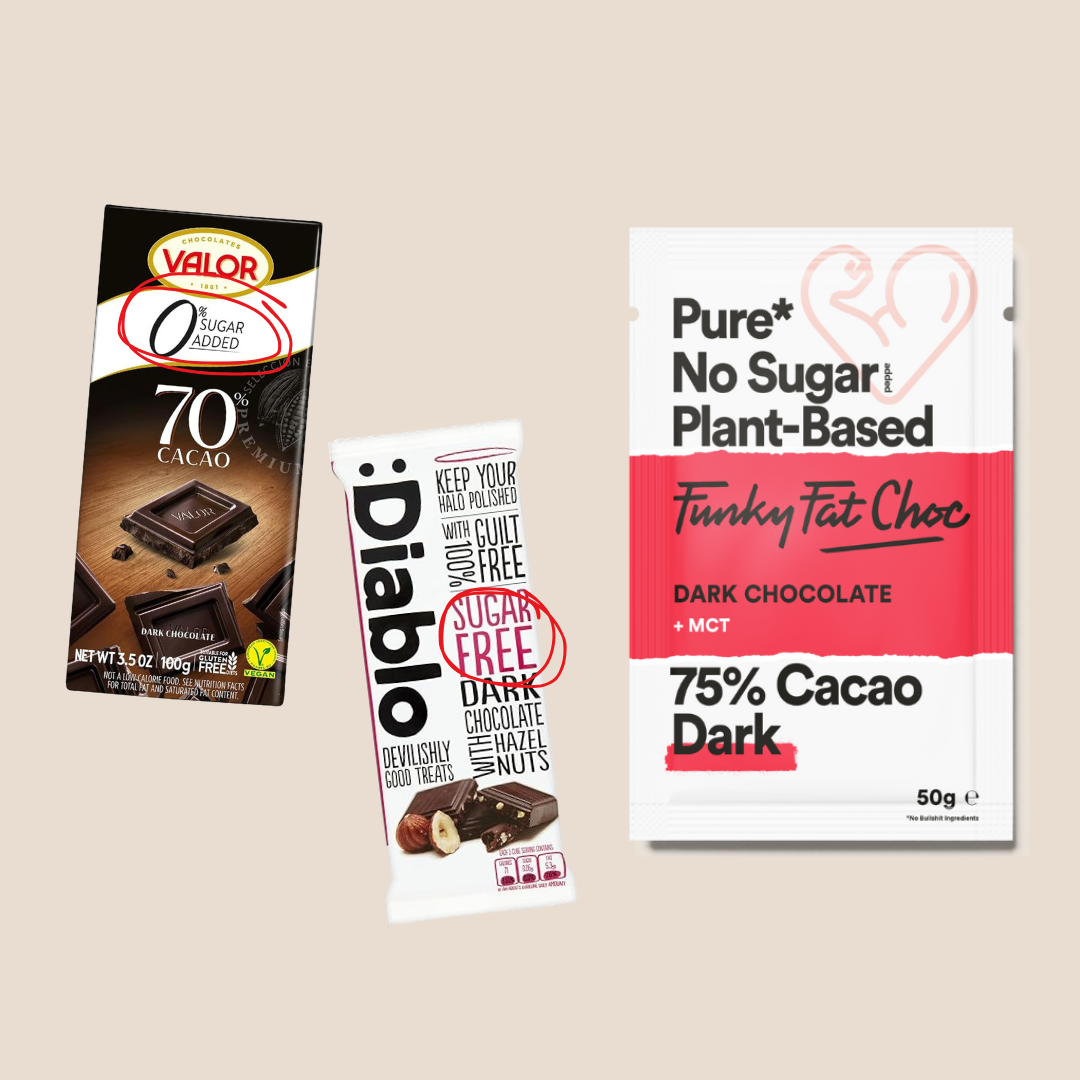
If you pick up a chocolate bar in Europe today, you will likely see at least one of these claims on the label: “sugar-free”, “no added sugar”, or something more vague like “functional ingredients”. They are not the same thing. Not even close. And understanding the difference can completely change how you shop for food that actually supports your body.
This article breaks it down in a clear, practical way — without the health jargon. We’ll explain what these claims actually mean under European food regulations, why “functional food” is a real scientific category (not just a marketing phrase), and how ingredients like cacao and MCT oil turn chocolate from a simple treat into something with real functional value. Funky Fat Foods chocolate is the example we’ll refer to — not just because it’s ours, but because it’s one of the clearest real-life examples of functional chocolate in Europe right now.
Let’s start with the labels you see every day — and what they actually mean in practice.
What “Sugar-Free” Actually Means in Europe
“Sugar-free” is a regulated nutrition claim under EU food law (Regulation (EC) No 1924/2006), applied across most European markets. To use this claim, a product must contain no more than 0.5g of sugars per 100g or 100ml. That includes both naturally occurring and added sugars.
It is a strict definition. It tells you something very specific about composition: there is virtually no sugar present in the product. That is what makes it useful — and also why it is often misunderstood.
What it does NOT tell you
Sugar-free does not automatically mean “healthy” or “gut-friendly”. A product can be sugar-free and still contain sweeteners that may not suit everyone. Maltitol, for example, is commonly used in sugar-free products across Europe but can still impact blood sugar and digestion.
At Funky Fat Foods, we use erythritol — a naturally derived sweetener with a glycaemic index of 0. It does not raise blood glucose and is generally well tolerated. That difference matters when you are choosing chocolate for stable energy and balance.
What “No Added Sugar” Actually Means
“No added sugar” is often misunderstood. It does NOT mean low sugar. It simply means no sugar or sugar-containing ingredients were added during production.
A product can still contain natural sugars from ingredients like fruit, dairy, or nuts and legally carry this claim. That is why a smoothie, a fruit snack, or even a granola bar can be “no added sugar” while still being naturally high in sugar.
The key distinction
- Sugar-free: tells you how much sugar is in the final product
- No added sugar: tells you nothing was added during production
Both claims are valid under EU law. Neither tells you how the food affects energy, cravings, or balance — which is where functional food becomes relevant.

What Is a Functional Food?
“Functional food” is not a strict legal label in Europe in the same way as sugar-free. It is a science-based category used in nutrition research and EU health literature.
In simple terms:
A functional food is one that provides benefits beyond basic nutrition.
It does something in the body — not just calories, but a measurable effect on function, health, or wellbeing.
This is where things become interesting. Because most foods do not fall into this category. They nourish, but they do not necessarily support specific physiological functions.
Functional food in real life
Fermented foods support gut microbiota. Oats contain beta-glucan, which supports cholesterol regulation. Fatty fish provides omega-3s, which support brain and heart function. These are established functional foods backed by research.
Cacao belongs in this category too — but only when it is minimally processed and combined with meaningful ingredients.
Cacao: A Widely Researched Functional Ingredient
Raw cacao is one of the most studied plant-based functional ingredients in nutrition science. Its key compounds are flavanols — natural antioxidants that influence vascular, brain, and metabolic function.

Heart and circulation support
Cacao flavanols help stimulate nitric oxide production, which supports healthy blood flow and vascular function. Research shows that regular intake may support normal blood pressure and circulation.
Cognitive performance
Flavanols can cross the blood-brain barrier and are linked to improved attention, memory, and cognitive processing. Studies on cocoa consumption show measurable effects on mental performance, especially in ageing populations.
Mood and energy balance
Cacao contains compounds such as theobromine and phenylethylamine, which are associated with alertness and mood regulation. It also provides magnesium, a key mineral involved in stress response and energy production.
Why MCT Oil Changes Everything
MCT oil (medium-chain triglycerides) is another ingredient with functional properties. Unlike most fats, it is rapidly converted into ketones by the liver and used as an immediate energy source.
What MCTs do in the body
- Fast energy production without relying on blood sugar spikes
- Mental clarity support through ketone metabolism
- Satiety support, helping reduce unnecessary snacking
- Synergy with cacao, improving absorption of fat-soluble compounds
For a deeper breakdown of the differences between C8 and C10 MCTs, see our MCT guide here.
So Is Funky Fat Foods Chocolate Functional?
By the scientific definition, yes. Here is why:
- High cacao content for flavanol density
- MCT oil for fast, clean energy metabolism
- Erythritol sweetening (0 GI) for stable blood sugar response
- No maltitol, no unnecessary additives, no artificial fillers
It is not positioned as a health product or supplement. But it is designed using ingredients that have documented functional effects.
The Funky Fat Dark chocolate bar is the clearest example. It is chocolate that is built to do more than just taste good — without turning into something artificial or overly processed.

How to Choose Better Chocolate in Europe
If you want to make better choices in the supermarket, here is what actually matters:
- Cacao percentage — aim for 75% or higher for meaningful flavanol content
- Sweetener quality — erythritol, stevia, monk fruit, or allulose are better options than maltitol or xylitol
- Ingredient list — short, simple, and understandable is usually a good sign
- Functional ingredients — MCT oil, nuts, cacao, and fibre-rich additions add value
- No added sugar transparency — always check the nutrition table, not just the front label
You can explore our full chocolate collection here to see how this approach translates into real products.
The Bottom Line
Across Europe, food labels like “sugar-free” and “no added sugar” are regulated and useful — but limited. They tell you what is NOT in a product, not what it actually does for your body.
Functional food is different. It is about measurable effects — on energy, cognition, metabolism, and wellbeing. Cacao and MCT oil are two of the most studied ingredients in this space, and when combined with clean sweeteners like erythritol, they create something genuinely different from standard chocolate.
This is not about turning chocolate into medicine. It is about making it work better for your body — without losing what makes it enjoyable in the first place.
No added sugar. Better ingredients. Smarter chocolate.
Stay funky.



Leave a comment
All comments are moderated before being published.
This site is protected by hCaptcha and the hCaptcha Privacy Policy and Terms of Service apply.