

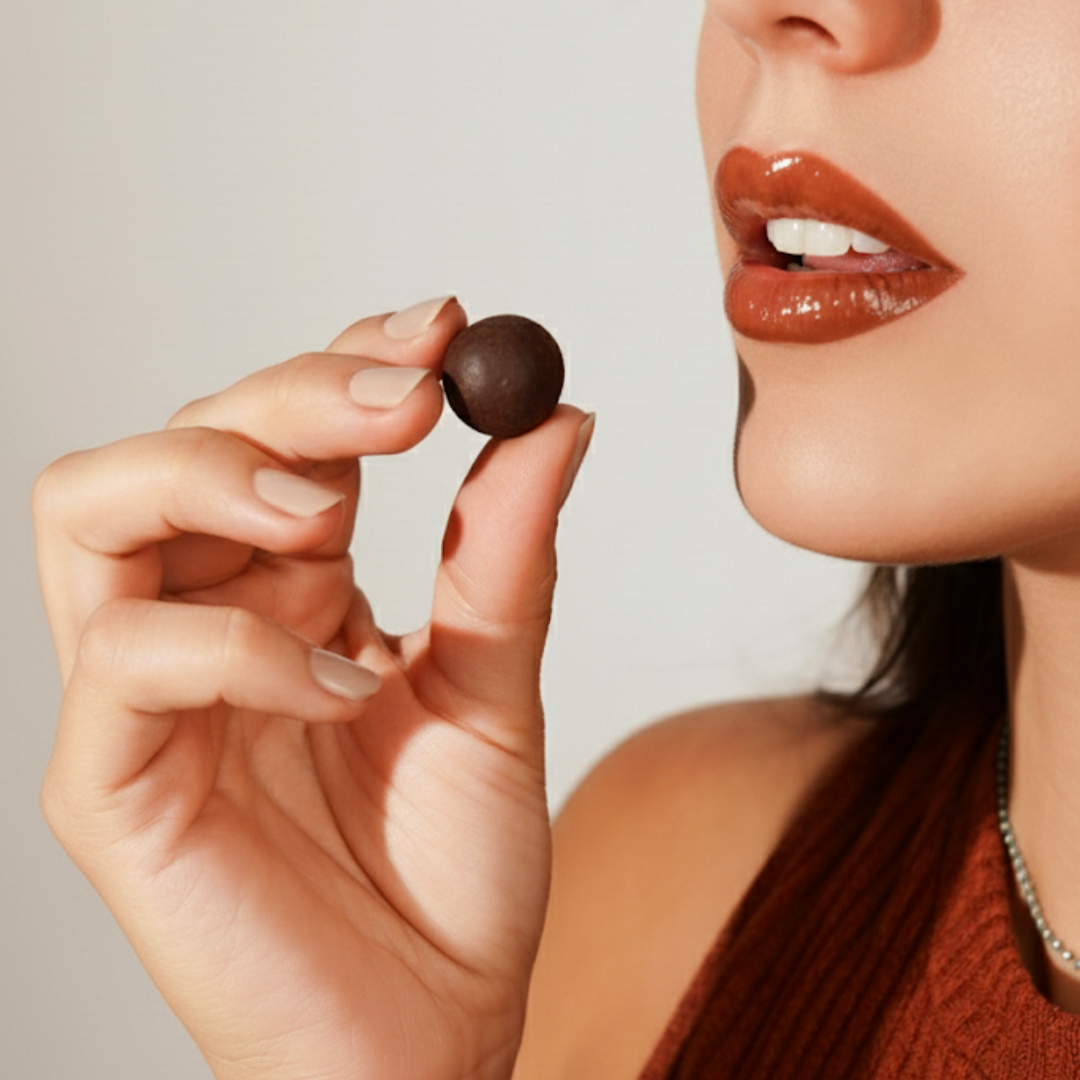
Sugar-free chocolate is everywhere. Supermarkets, health stores, online shops — all promising a sweeter treat without conventional added sugar. But if you’ve ever wondered, “What does sugar-free chocolate really mean?”, you’re asking the right question.
Because “sugar-free” doesn’t automatically mean better.
Some products labelled sugar-free rely on artificial sweeteners, fillers, and long ingredient lists. Others keep things more straightforward: rich cacao, clearly named sweeteners, and clean ingredients you can understand.
This guide breaks it all down — so you can read the label with clarity and choose chocolate that fits your standards.
1. What Does “Sugar-Free” Really Mean?
In the EU, “sugars-free” is a regulated nutrition claim. It may only be used when a product meets the legal conditions, including no more than 0.5 g of sugars per 100 g or 100 ml.
It does not automatically mean:
- No carbohydrates
- No sweeteners
- A simpler ingredient list
- No calories
Most sugar-free chocolate replaces traditional sugar with alternative sweeteners. The key question is: Which ones?
P.S. noticed we changed our packaging? We now say "No added sugar" rather than "sugar-free" since some of our ingredients have naturally occurring sugars like cacao.

2. Why Added Sugar Is Worth Looking At
Before diving into alternatives, it helps to understand why many people look for no added sugar chocolate in the first place.
Added sugar changes the nutrition profile of a product and can quickly increase the amount of sugars listed on the label.
That’s why the back of the pack matters. It helps you see:
- How much sugar the product contains
- Whether sugars were added
- Which sweeteners are used instead
- How long and clear the ingredient list is
Removing added sugar is one useful label choice. Replacing it thoughtfully is the next one.
3. Artificial vs Other Sweeteners: What’s the Difference?
When it comes to sugar-free chocolate, the real question isn’t only whether it contains sugar — it’s what replaces it.
There are different kinds of sweeteners used in sugar-free and no-added-sugar products.
- Artificial sweeteners
- Other sweeteners, such as polyols or steviol glycosides
The difference matters because it affects taste, texture, the ingredient list, and how the product is positioned. If a brand calls something a natural sweetener, the ingredient list should still tell you exactly what is inside.
Sweeteners You May See on Ingredient Lists
Common sweeteners in no-added-sugar chocolate may include:
- Erythritol
- Steviol glycosides
Different sweeteners have different legal statuses, taste profiles, and labelling requirements, so the safest move is simple: check the ingredient list and nutrition table, not only the front-of-pack promise.
If you want to go deeper, you can compare sweetener types and see how labels describe them.
When choosing sugar-free chocolate made with clean ingredients, look for clear, specific ingredient names instead of vague claims.

Sweeteners to Check More Carefully: Maltitol and Xylitol
Many products labelled “sugar-free” rely on maltitol or xylitol.
These are sugar alcohols, but they are not the same as erythritol.
- They are commonly used in mass-market sugar-free sweets.
- They may appear in products that still taste very sweet.
- They are a reason to read beyond the front-of-pack label.
This is why reading the ingredient list matters more than trusting one claim on the front.
Sugar-free doesn’t automatically mean a product fits your standards. A cleaner no-added-sugar chocolate should make its sweetener choice easy to understand.
The takeaway? Not all sweeteners are the same — and the label tells you more than the buzzwords.
4. Why Clean Ingredients Matter in Sugar-Free Chocolate
If you want to know whether sugar-free chocolate fits your standards, ignore the front label for a moment. Flip it over.
A clearer product will usually have:
- Short ingredient lists
- Recognisable components
- No unnecessary fillers
- No hidden sugars
- Clearly named sweeteners
Clean ingredients matter because they make the product easier to understand.
If a chocolate bar contains ten stabilisers and hard-to-follow additives, the absence of added sugar does not automatically make it the right choice for you.
5. Label Reading and Sweetener Choices
One reason people seek sugar-free chocolate is to make more informed choices around sweetness and everyday snacking.
When chocolate contains no added sugar and uses clearly named sweeteners, it can be easier to:
- Compare products side by side
- Understand what creates the sweet taste
- Choose a treat that matches your ingredient standards
This doesn’t make it automatically “good” or “bad”. It simply makes the choice clearer.
If you want more background, this article on nutrition label details can help you read claims more carefully.
6. Do Sweeteners Increase Cravings?
Some people say sweeteners make them want more sweetness. Others use them as part of a routine that works for them. The reality is personal.
Sweet taste preferences can be influenced by many things, including habits, portion size, meal patterns, and the overall diet.
That’s why the most useful question is not “Are sweeteners perfect?” It’s: Does this product fit the way I want to eat?
Chocolate alone isn’t the full story.
7. The Role of Cocoa Butter in Sugar-Free Chocolate
Chocolate made with quality fats — like cocoa butter — has a richer texture and a smoother melt.
That matters for taste. Better texture can make a small chocolate moment feel more intentional and more enjoyable.
When done well, sugar-free or no-added-sugar chocolate should still taste like proper chocolate. Otherwise, what are we even doing?
8. Does Sugar-Free Mean You Can Eat Unlimited Amounts?
Sugar-free doesn’t mean unlimited.
Even with no added sugar, chocolate is still chocolate. Portion size, total ingredients, calories, and your own preferences still matter.
The point isn’t extremes — it’s balance.
9. Is Sugar-Free Chocolate Actually a Smart Choice?
The honest answer: It depends on the ingredients.
Sugar-free or no-added-sugar chocolate can be a strong option when:
- It contains clean ingredients
- It avoids unnecessary fillers
- It uses clearly named sweeteners
- It has no added sugar
- It still tastes like chocolate you actually want to eat
It may be less convincing when:
- It’s filled with unnecessary additives
- The sweetener choice is unclear
- The front-of-pack claim is doing all the work
10. How to Choose the Best Sugar-Free Chocolate
If you’re ready to make a more informed choice, here’s a simple checklist:
- Choose chocolate with no added sugar, when that claim is shown clearly on the label
- Check whether the product uses erythritol, maltitol, or another sweetener
- Look for minimal, clean ingredients
- Read the full ingredient list, not only the front label
- Choose the option you genuinely enjoy eating
Small label upgrades can make your snack shelf feel a lot more intentional.

11. The Bigger Picture: Balance, Clean Ingredients and Everyday Enjoyment
Chocolate is part of your diet — not your entire food philosophy.
A balanced routine can include:
- Meals you enjoy
- Protein and fibre from everyday foods
- Ingredients you recognise
- Snack moments that feel intentional
- A realistic approach to sweetness
Choosing no-added-sugar chocolate is one step. Knowing why you’re choosing it is what makes it easier to enjoy.
Final Thoughts: Informed, Not Fearful
Sugar-free chocolate isn’t automatically the answer — but it isn’t automatically a problem either.
The difference lies in the details:
- The sweeteners used
- The quality of ingredients
- Your personal preferences
- Your overall eating pattern
When made with clean ingredients, clearly named sweeteners, and no added sugar, chocolate can fit beautifully into a balanced lifestyle.
The goal isn’t perfection. It’s informed choice.
Upgrade your chocolate. Read the label. Choose balance over extremes — and stay funky.
Sources and Notes
- European Commission: Nutrition and Health Claims — used for the general explanation that nutrition and health claims are regulated in EU food marketing.
- Regulation (EC) No 1924/2006 — used for the explanation that “sugars-free” and “with no added sugars” are regulated nutrition claims with specific conditions.


Leave a comment
All comments are moderated before being published.
This site is protected by hCaptcha and the hCaptcha Privacy Policy and Terms of Service apply.